Structural Evasion: The Art of Non-Answers
When asked direct questions, they respond with tactics that avoid answering while creating the impression they've engaged: changing the subject, answering a different question, attacking the questioner, or drowning you in irrelevant information.
Why It Matters: Evasion reveals they can't or won't defend their position directly. If they had good answers, they'd give them. Structural evasion is designed to exhaust you, make you feel like you're being unreasonable for pressing, and ultimately get you to give up on getting straight answers. It works through attrition—most people eventually stop asking.
Real Examples:
Topic Shifting (Whataboutism)
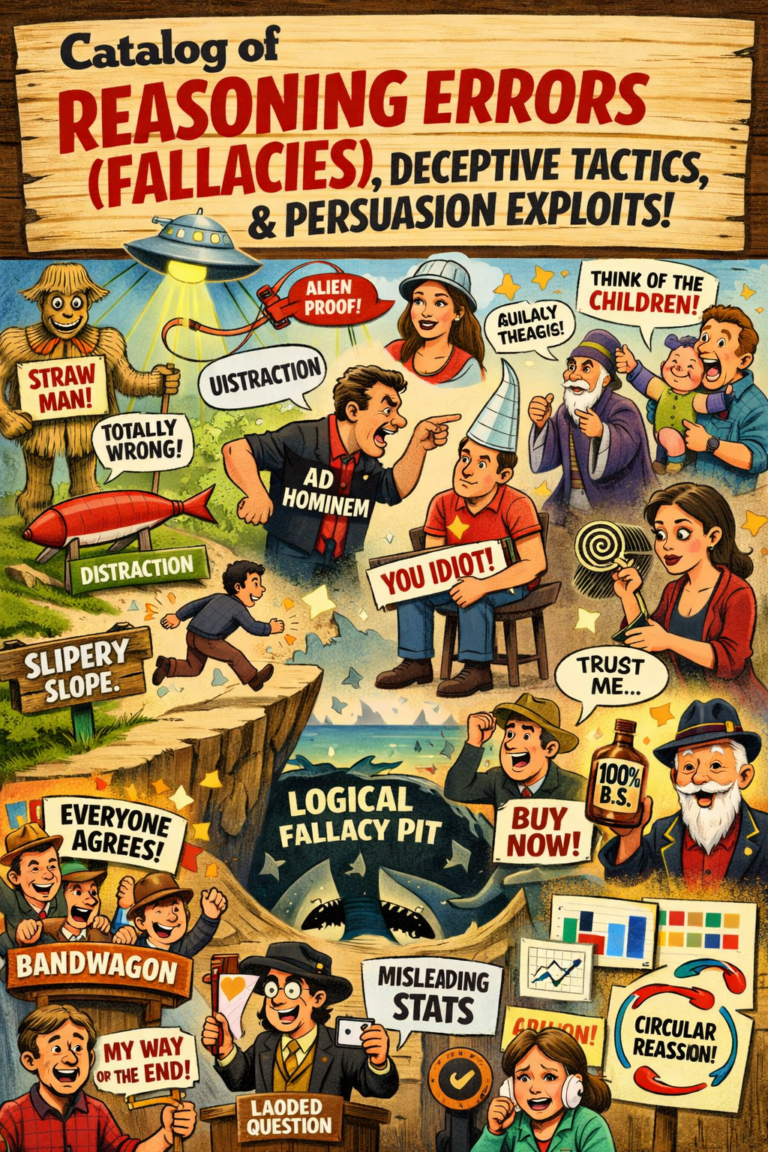
Political Evasion: Reporter: "Your healthcare plan will cause 20 million people to lose insurance. How do you respond?" Politician: "What about the failures of Obamacare? What about rising premiums? What about the other party's record?" This doesn't answer whether the plan causes coverage loss—it shifts to a different topic — a structural cousin of the motte-and-bailey. The evasion works because both topics involve healthcare, making the shift feel relevant when it's actually dodging.
"What About Hillary's Emails?": During Trump scandals, defenders would respond: "What about Hillary's emails?" This doesn't address the original scandal—it shifts to a different person's different scandal. The pattern: when your side is criticized, point to the other side's failures. This isn't defense—it's topic shifting.
Corporate Whataboutism: "Your factory pollutes the river." Response: "What about all the jobs we create? What about our community contributions? What about other companies' pollution?" This doesn't address whether they pollute the river. It shifts to different topics.
Answering a Different Question
Political Debate Technique: Question: "Will you commit to not cutting Social Security?" Answer: "I'm committed to strengthening Social Security for future generations, ensuring its long-term viability through responsible reforms." This sounds responsive but doesn't answer whether they'll cut it — the mirror image of functionally useless questions (useless answers given to perfectly useful ones). "Responsible reforms" could mean cuts. They answered "Do you support Social Security in principle?" not "Will you cut it?"
Sales Evasion: Customer: "Does this product work for X?" Salesperson: "This product has amazing reviews and customers love it!" Doesn't answer whether it works for X—answers a different question about general popularity.
Corporate PR: "Did your CEO sexually harass employees?" Response: "We take all allegations seriously and are committed to a safe workplace." Doesn't answer whether it happened—answers what their policy is.
Ad Hominem Deflection
"You're Just Biased/Jealous/Angry": When asked for evidence, attack the questioner's motives (a hallmark of the four narcissistic conversational tactics): "You only ask because you hate our movement," "You're just jealous of our success," "You're too negative to see the truth." This doesn't answer the question—it attacks the questioner to make asking feel illegitimate.
Credentials Attack: "What are YOUR qualifications to question this?" Doesn't answer the substance—shifts to whether the questioner has standing to ask. A non-expert can still ask valid questions, and attacking credentials doesn't answer them.
Tone Policing: "Why are you so angry?" "Why are you being disrespectful?" Doesn't answer the question—shifts to the questioner's manner of asking. The substance disappears behind tone complaints.
Gish Gallop (Overwhelming with Volume)
The Red Flag: Overwhelming you with so many claims, arguments, or pieces of information that you can't possibly respond to all of them. By the time you address one point, they've moved on to ten more.
Why It Matters: The Gish Gallop (named after creationist Duane Gish) exploits an asymmetry: it takes 10 seconds to make a false claim and 10 minutes to refute it. If someone makes 20 false claims in 2 minutes, you'd need 200 minutes to refute them all. By then, they've "won" because you couldn't keep up. The volume creates the impression of overwhelming evidence when it's actually overwhelming bullshit.
Real Examples:
Duane Gish Debates: Gish would rapid-fire claims in debates: "There are no transitional fossils, the Cambrian explosion disproves evolution, thermodynamics makes evolution impossible, DNA is too complex, whales couldn't have evolved from land mammals…" Each claim is false, but refuting all of them in a debate format is impossible. The volume intimidates opponents and impresses audiences.
Anti-Vax Arguments: "Vaccines contain aluminum, formaldehyde, mercury, aborted fetal cells, they cause autism, SIDS, autoimmune disorders, the CDC is hiding data, the 1986 law protects manufacturers, VAERS reports thousands of injuries, vaccine court has paid billions…" Each is either false or misleading, but addressing all of them exhaustively requires hours. Most people give up.
Conspiracy Theory Firehose: QAnon, Ancient Aliens, 9/11 truthers—they present hundreds of anomalies, questions, and "coincidences." Each has an explanation, but the volume makes debunking feel futile. "Okay, you explained that, but what about these 50 other things?"
Trump Rally Technique: Rapid-fire assertions: "The economy's great, unemployment's low, we built the wall, we defeated ISIS, the Democrats want open borders, they want to take your guns, raise your taxes, we're winning on trade, China's paying tariffs…" It's impossible to fact-check in real-time. Some claims are true, some false, some misleading—but the volume prevents evaluation.
How to Spot It
- The response doesn't address your question
- You've asked the same question 3 times and gotten 3 different non-answers
- They shift to attacking you instead of defending their position
- They bury you in volume rather than address substance
Context — When Complexity Is Legitimate
Not all evasion is illegitimate:
Genuinely Complex Questions: Some questions don't have simple answers. "What should we do about healthcare?" requires addressing insurance, costs, coverage, quality, access, innovation—any simple answer would be incomplete. This is legitimate if:
- They acknowledge the complexity upfront
- They address the substance, even if not briefly
- They don't hide behind complexity to avoid committing
Classified/Privileged Information: Sometimes people legitimately can't answer: legal constraints, national security, privacy, confidentiality agreements. This is legitimate if:
- They explain WHY they can't answer
- They don't use "I can't discuss that" as a blanket evasion
- They answer what they CAN answer
Need for Context: Sometimes direct yes/no answers would be misleading without context. This is legitimate if the context is actually relevant and they do eventually answer after providing it.
The key difference: Legitimate complexity acknowledges your question and engages with it, even if the answer is complex. Evasion avoids engaging at all.
How to Respond
- Return to the question: "I understand, but that doesn't answer my question. Let me ask again: [question]."
- Refuse the topic shift: "We can discuss that later. First, can you answer [original question]?"
- Call out the pattern: "I've asked this question three times and haven't gotten an answer. Will you answer it?"
- For Gish Gallop: "That's too many claims to address. Pick your strongest one and let's examine that."
- Set boundaries: "I'm asking about X. Will you address X, yes or no?"
If they still won't answer after direct pressing, you've learned they can't or won't defend their position. That's valuable information.