Emotional Manipulation: Bypassing Reason with Feeling
Triggering strong emotions such as fear, anger, guilt, shame, hope and/or urgency to bypass rational evaluation. The argument depends on how you feel, not what’s true. When emotion fades, the logic collapses, but by then you’ve already made the decision.
Emotions aren’t inherently bad, they provide valuable information and motivate action. But emotions can hijack rational or proper decision-making. Grifters know that people in strong emotional states make impulsive decisions, don’t ask hard questions, and override their better judgment.
Fear Appeals
“Your Computer Has a Virus” Scams: Pop-up warnings with urgent alerts: “YOUR COMPUTER IS INFECTED! CALL NOW!” Flashing red, countdown timers, sirens. The fear is immediate and visceral—your computer is at risk, your data could be stolen, you must act NOW. The urgency prevents rational assessment: “Wait, how would a website know my computer has a virus? Why would Microsoft phone support be a random number?” By the time you calm down and think clearly, you may have already called and given remote access to scammers.
Political Fear Ads: “They’re coming for your guns/healthcare/jobs/children.” “Immigrants!” Fear drives turnout and donations — the central engine of classical propaganda and agitprop. In the United States the entire Republican strategy since 1970 has been to exploit the fear southern white men have of the black population. (Using many of the techniques described in this book). From Nixon and Arthur Finklestein to Donald Trump fake stories about people minorities murdering people, marijuana causing violence, socialized healthcare involving death panels and black people using white water fountains.
Anti-Vax Fear Mongering: “Vaccines contain toxins that will harm your baby.” Images of injured children, stories of sudden seizures, claims of autism. The fear is primal—protecting your child. It bypasses rational evaluation: “What are the actual risks? How do vaccine injury rates compare to disease rates? What do toxicologists say about trace amounts?” Fear drives the decision before evidence is consulted.
Guilt and Shame
Charity Manipulation: “For just $1 a day, you could save this child’s life.” Showing a specific suffering child, personal appeal. The guilt is immediate: “I spend $1 on coffee. How can I say no?” This isn’t necessarily wrong—the child’s suffering is real—but the emotional manipulation prevents asking: “What percentage of my donation actually reaches beneficiaries? Are there more effective charities? Is this the best use of my charitable giving?” The guilt short-circuits evaluation — a close relative of how decision fatigue is exploited to push impulse choices.
Environmental Guilt: “Your carbon footprint is destroying the planet. Every flight you take kills polar bears.” Personal guilt motivates behavior change. But it can also manipulate: companies that produce massive industrial emissions shift responsibility to individual consumers. The guilt prevents asking: “What’s my individual impact compared to systemic sources? Are there collective solutions more effective than individual shame?”
Religious Guilt: “You’re a sinner. You deserve hell. Only our church can save you.” The shame of inherent unworthiness, combined with exclusive salvation, creates powerful manipulation. The guilt prevents asking: “Is this theology accurate? Do other interpretations exist? Am I being manipulated?”
“Check Your Privilege” (as manipulation): When used as guilt: “Everything you have is because of privilege, nothing is earned, you should feel guilty for your success.” This can be manipulative even when privilege is real. The shame prevents engaging with: “How do we distinguish privilege from effort? What constructive response to privilege exists beyond guilt? Is this claim about privilege true in this specific instance?”
Manufactured Urgency
“Limited Time Offer – Act Now!”: Time pressure prevents evaluation. “This deal expires in 2 hours!” Shopping cart countdown timers. Artificial scarcity: “Only 3 left!” The urgency prevents asking: “Do I actually need this? Is this really a good price? Is the scarcity real or manufactured?” By the time the urgency fades, you’ve already bought.
MLM Recruitment: Multi-level marketing uses manufactured urgency: “This is a ground-floor opportunity! Get in now before your market is saturated! Your neighbor is already signing up!” The urgency prevents researching: “What percentage of MLM participants make money? Is this a pyramid scheme? Do the economics work?” The pressure to decide quickly bypasses analysis.
Investment Scams: “I have insider information. This stock will explode. You need to invest NOW before the news breaks.” The urgency prevents due diligence. Bernie Madoff used urgency: spots in his fund were supposedly so exclusive you had to beg to get in. The artificial scarcity and urgency prevented investors from asking for documentation or third-party verification.
Exploiting Hope and Desperation
Miracle Cures: “This alternative treatment cured my stage 4 cancer!” Testimonials from desperate, hopeful people. The hope is overwhelming when facing terminal diagnosis. It bypasses: “What’s the evidence? Has this been tested? What’s the survival rate? Are there known effective treatments I should try first?” Hope drives people to spend life savings on unproven treatments while forgoing proven ones.
Get Rich Quick Schemes: “I made $50,000 in my first month! You can too!” The hope of escape from financial stress, of finally breaking through, of being free. It bypasses: “What percentage of people actually make money? What are the costs? What are the odds of success?” Hope clouds the evaluation of obvious scams.
Political Messianism: “This candidate will solve all our problems! Finally, someone who understands!” The hope that a savior leader will fix everything. It bypasses: “What’s the actual policy platform? What’s this person’s track record? What are the institutional constraints on what any president/leader can do?” Hope for transformation prevents realistic assessment.
Anger and Outrage
Outrage Clickbait: “You won’t BELIEVE what this celebrity said!” “This one trick that doctors HATE!” Anger drives engagement. The outrage prevents asking: “Is this quote in context? Is this source reliable? Am I being manipulated for clicks?” Anger bypasses critical evaluation.
Political Rage: “They’re destroying our country!” Both sides use rage to drive engagement and donations. The anger feels righteous and prevents asking: “Is this characterization accurate? What would the other side say? Are there good-faith disagreements here?” Rage makes every policy dispute existential.
“War on X”: “War on Christmas,” “War on Men,” “War on Free Speech.” Framing disagreements as wars manufactures outrage. The anger prevents engaging with: “Is this actually systematic persecution or scattered individual instances? Are there legitimate reasons for these changes?” War metaphors bypass nuance.
How to Spot It
- Notice when you feel strong emotions before you’ve evaluated evidence
- Ask: “Is this designed to make me feel X so I’ll do Y?”
- Check if urgency is real or artificial
- See if the emotional appeal remains convincing after a cooling-off period
Context — When Emotional Appeals Are Legitimate
Emotions aren’t manipulation in themselves:
Genuine Empathy: A charity showing real suffering to motivate donations isn’t necessarily manipulating—suffering is real, empathy is appropriate. It becomes manipulation when:
- Emotions substitute for evidence of effectiveness
- Guilt is weaponized to prevent questions
- The appeal prevents rational evaluation of alternatives
Legitimate Urgency: Some situations genuinely require quick decisions—medical emergencies, imminent threats, time-sensitive opportunities. It’s legitimate when:
- The urgency is real, not manufactured
- You’re given enough information to decide
- Someone isn’t profiting from preventing your deliberation
Authentic Passion: Emotional investment in causes isn’t manipulation. It becomes manipulation when:
- Emotion substitutes for argument
- You’re shamed for not feeling the same way
- The emotion prevents questions rather than motivating action
The key difference: Legitimate emotional appeals accompany evidence and reasoning. Manipulative emotional appeals replace them.
How to Respond
- Recognize the emotion: “I notice I’m feeling [fear/guilt/urgency]. Why?”
- Delay: “Let me think about this when I’m calmer.”
- Ask: “If I weren’t afraid/guilty/angry, would this still make sense?”
- Separate emotion from evaluation: “This triggers strong feelings. What are the actual facts?”
- Test the urgency: “Why must I decide right now? What happens if I wait 24 hours?”
- If they can’t let you think clearly, they’re manipulative. (For the legitimate use of these same levers, see the six psychological triggers that influence and persuade.)
Related reading
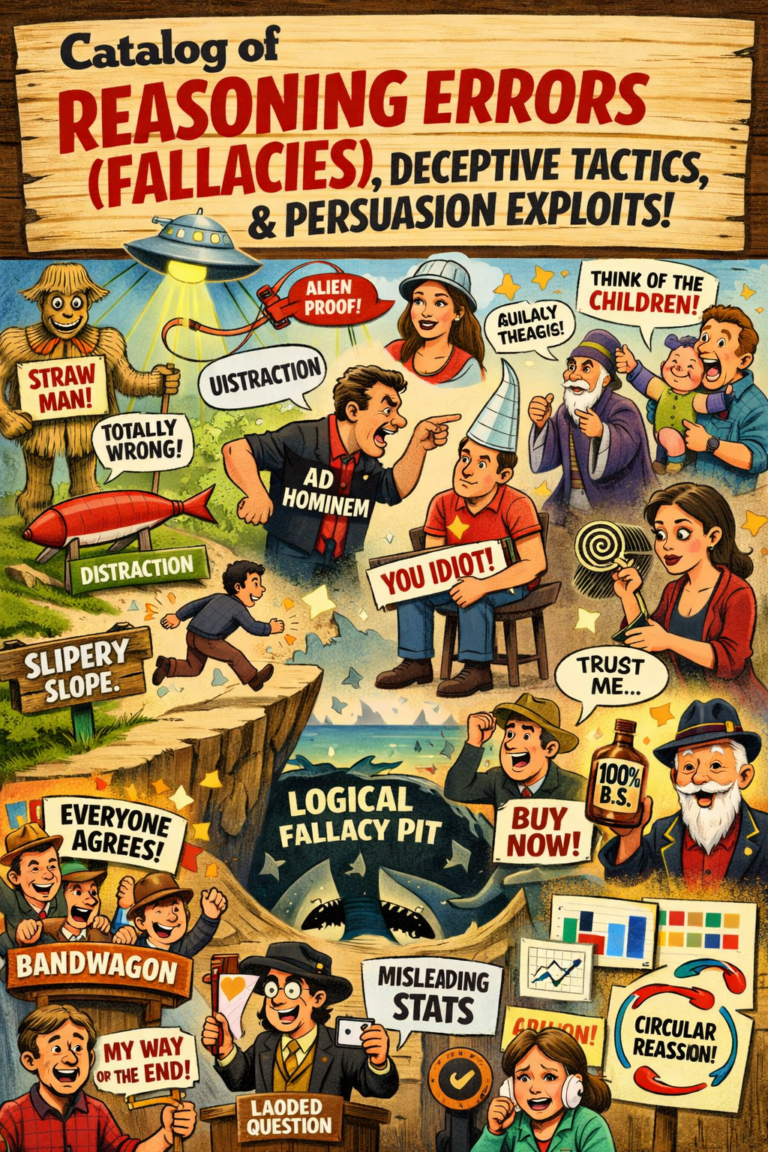
- Catalog of Reasoning Errors, Fallacies, Deceptive Tactics, and Persuasion Exploits
- Cheat Sheet: Psychological Pricing & Scarcity Tactics
- How Salespeople, Medical Professionals, and Politicians Exploit Decision Fatigue
- Social Proof Manipulation: Manufacturing Consensus
- Effective Propaganda 101
- 6 Psychological Triggers that Influence & Persuade