The Science of Persuasive Framing – Shape Perception, Shape Reality
Table of Contents
I’d appreciate it if you would share this post with others who would find it interesting or useful. Thank you.
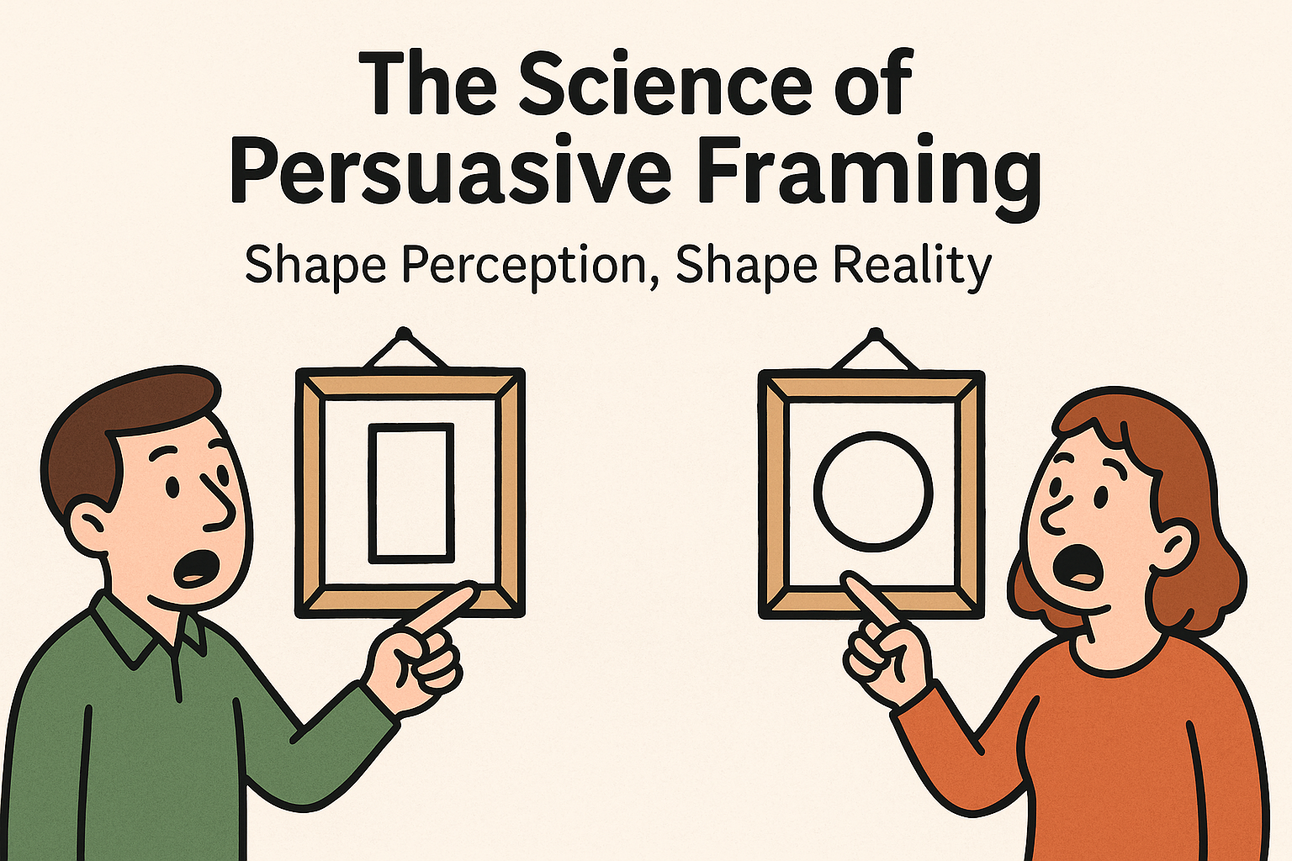
Theme: The Science of Persuasive Framing – Shape Perception, Shape Reality
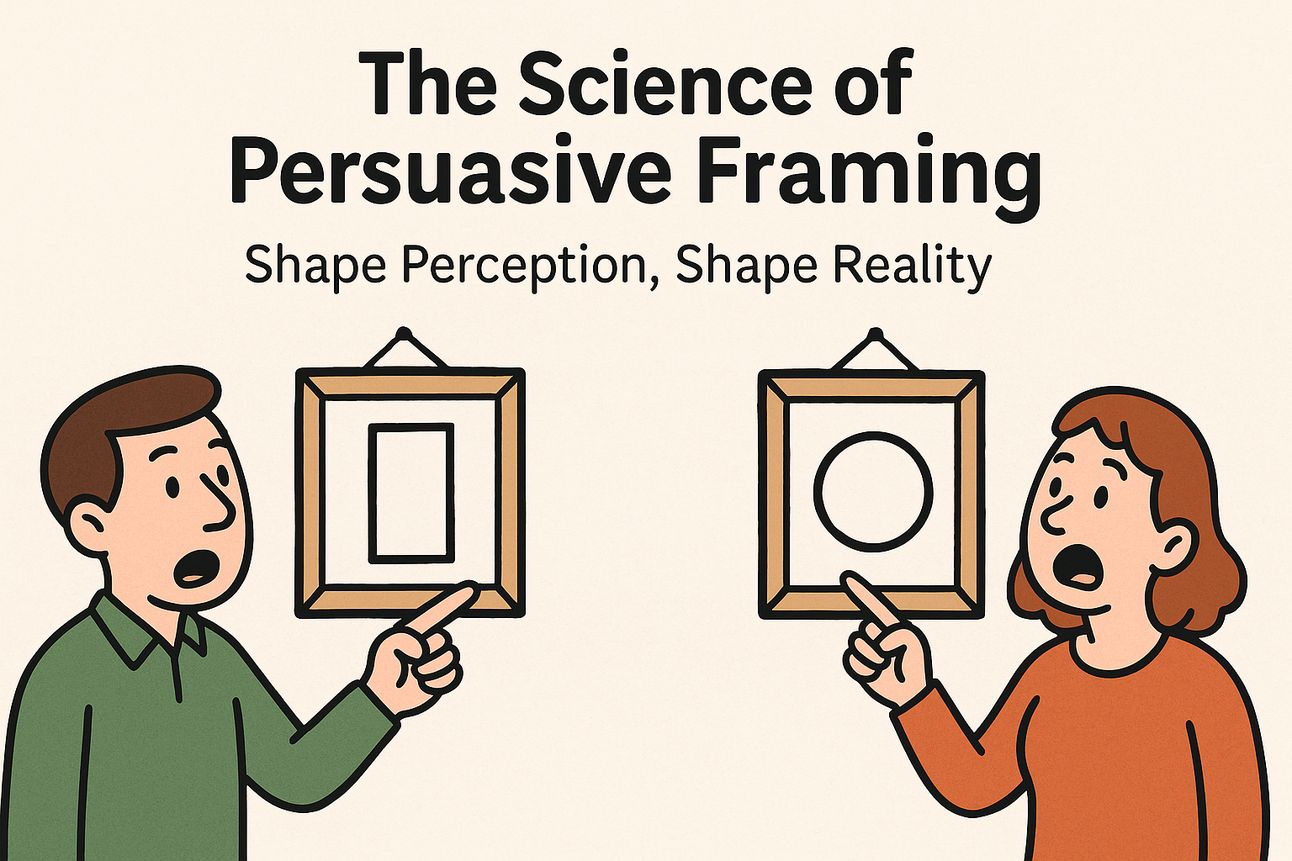
Framing isn’t about changing facts, it’s about changing perception of facts. Get this right, and you can transform ordinary offers into irresistible opportunities. Here are some high impact framing tactics.
The Contrast Principle: Why Options Feel Better When Paired Strategically
All communication is comparison. Comparison of new information vs already stored information. That’s one of my basic principles of communication. The contrast principle is even simpler – people will compare whatever they see to whatever they saw just before it.
Tactic: Present a high-ticket or complex option before your preferred choice. “Most of my clients look at Strategy A, which costs $5,000, and Strategy B, which costs $3,000. But honestly, Strategy C at $1,500 gives you 90% of the results for a fraction of the cost.”
Why It Works: When the brain hears a lower cost option after a bigger one, it feels like a bargain. Even if it’s still a premium price.
Loss vs. Gain Framing: How to Present the Same Offer with Double the Impact
Would you rather “save $1,000” or “avoid losing $1,000”?
The outcome is identical, but the reaction is dramatically different. People are twice as motivated to avoid loss as they are to pursue gain.
Tactic: Frame your offer in terms of avoiding loss. Instead of saying, “Sign up today and boost your revenue by 20%,” say, “Without this strategy, you are losing 20% of your potential income.”
Why It Works: Loss triggers emotional urgency associated with the survival instinct. When framed as avoiding a loss, decisions feel more urgent and harder to delay.
The Priming Effect: How to Precondition Their Mind Before You Speak
Most persuasion starts too late. By the time you’re making your case, their subconscious is already shaping the outcome.
Priming changes this by influencing thoughts before they realize a decision is being made.
Tactic: Use verbal and environmental priming to shape expectations. Say, “You’re about to see a strategy that top advisors rely on to triple their referrals…” before presenting your offer. Or, use visual cues that suggest authority—certificates, logos, or high-end visuals—before the conversation begins.
Why It Works: Primed minds seek confirmation. By planting subtle cues beforehand, you bias their perception in your favor.
Anchoring Bias: How to Set Perceived Value from the First Word
The first number or idea mentioned in a conversation becomes the anchor—everything after is judged relative to it.
Tactic: Introduce a high reference point early. “Many advisors spend $10,000 a year on marketing that barely moves the needle. But for a fraction of that investment, you could implement a strategy that actually generates results.”
Why It Works: Anchoring establishes a benchmark that makes your real offer seem more reasonable or valuable by comparison. Their mind adjusts expectations based on the initial reference point.
Time Distortion: Why Framing Urgency as a Future Cost Drives Faster Action
Scarcity works—but not when framed poorly. Instead of saying, “This offer expires soon,” frame the cost of inaction over time.
Tactic: Use future pacing to make the cost of delay feel immediate. “Every month you wait, you’re potentially missing out on $5,000 in revenue. That’s $60,000 a year lost just by waiting.”
Why It Works: People fear long-term loss more than short-term sacrifice. When you make the cost of inaction feel tangible, urgency shifts from theoretical to unavoidable.