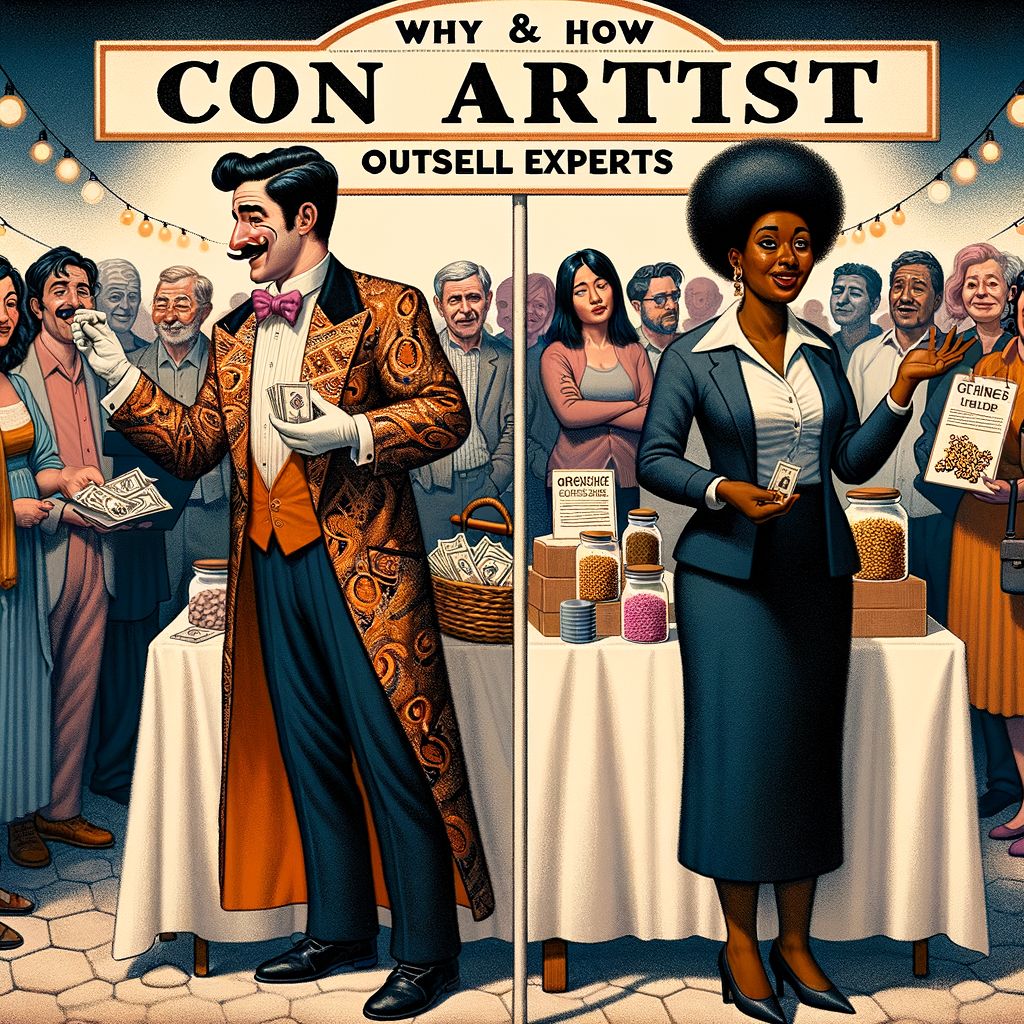
Why & How Con Artists Outsell Experts
Advterisment:
Table of Contents
- Introduction
- Reciprocity Is a Reflex – Even When It’s Rigged
- Storytelling Disarms Skepticism
- People Seek Emotional Relief, Not Rational Debate
- Identity Is the Gateway to Persuasion
- Social Proof Doesn’t Need to Be Real – Just Visibl …
- Certainty Outsells Accuracy
- Overwhelm Leads to Obedience
- Symbols of Authority Are Almost as Good as (and So …
- Scarcity Is a Stage, Not a Sales Trick
- Confusion Creates Compliance
- Final Word: Extract the Psychology, Burn the Decep …
Introduction
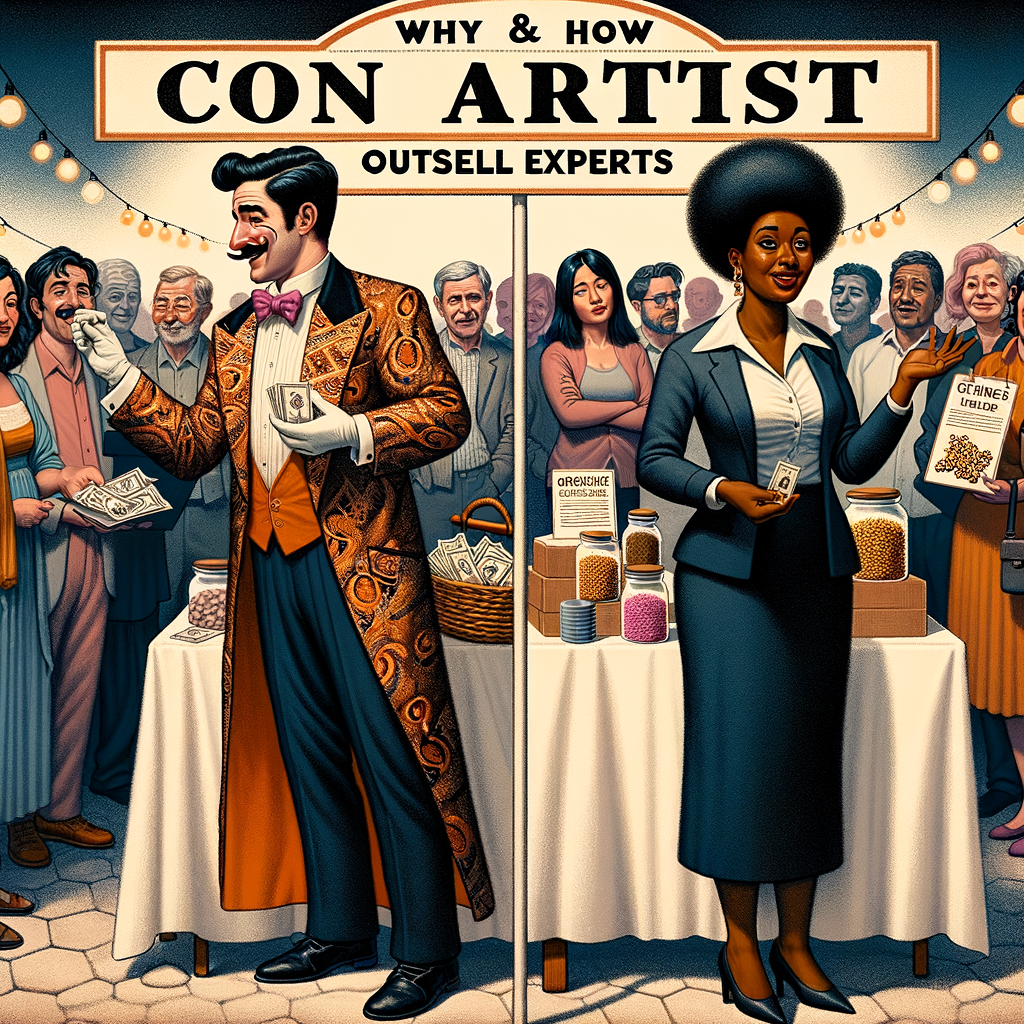
One of the biggest myths about schemes, scams and cons is the ridiculous idea that you can’t con an honest person. This is patently false. Con artists of all stripes, from crooked carnival barkers to politicians rely on a set of emotional levers to which we’re all vulnerable. So, here are 10 of those levers.
Reciprocity Is a Reflex – Even When It’s Rigged
The Manipulative Tactic: The scammer gives something: free advice, a compliment, a favor and then expects a return. The initial gesture is a setup. Once the victim feels indebted, even subtly, they’re easier to steer. The gift is not goodwill. It’s leverage. Emotional blackmail.
The Ethical Parallel: Give without strings. Generosity creates goodwill but only if the recipient feels free, not trapped. Reciprocity should inspire trust, not trigger guilt.
❝
“The moment the gift feels like bait, the trap springs shut.”
Storytelling Disarms Skepticism
The Manipulative Tactic: Con artists spin stories not facts. They weave narratives with urgency, mystery, and emotional pull. The story captivates and clouds. It locks the target in suspense and drives action before reflection. Facts lose to a good plot.
The Ethical Parallel: Tell stories: but real ones. Be prepared and be truthful. Invite your audience to think critically, even within the narrative. Use your targets psychologically but use it honestly.
❝
“We suspend disbelief for a good story—even when we shouldn’t.”
People Seek Emotional Relief, Not Rational Debate
The Manipulative Tactic: Con artists don’t bother with data. They offer escapes from shame, fear, debt, desperation or loneliness. When people are hurting, they don’t want proof. They want hope. Scammers bypass analysis by promising salvation, speaking directly to the limbic brain that governs urgency and survival. If it feels better, it must be true.
The Ethical Parallel: Start with empathy. Reflect their internal state before you prescribe the solution. Influence flows when people feel seen and understood.
❝
“Recognition of emotional distress often precedes cognitive receptivity.”
Identity Is the Gateway to Persuasion
The Manipulative Tactic: Con artists weaponize identity. They mirror the mark’s self-concept, “You’re too smart to be fooled.” Ironically, this very flattery becomes the bait. Now rejecting the offer would feel like rejecting their own identity.
The Ethical Parallel: Align your message with who they believe they are—or aspire to be. People don’t change for logic; they change for a version of themselves they want to protect.
❝
“If they see themselves in the message, they’ll fight to keep it true.”
Social Proof Doesn’t Need to Be Real – Just Visible
The Manipulative Tactic: Fraudsters know that in uncertain situations, people copy others. They manufacture popularity with fake crowds, planted testimonials, and forged endorsements. It’s not the proof that matters – it’s the perception of consensus. If it looks trusted, it feels safe.
The Ethical Parallel: Use authentic, verifiable proof. Highlight relevant testimonials, press coverage, and case studies—not to manipulate, but to reduce decision anxiety.
❝
“We believe what others believe—especially if they look like us.”
Certainty Outsells Accuracy
The Manipulative Tactic: Confidence, not correctness, is what convinces. The brain sees confidence as a proxy for credibility. Con artists speak with conviction. No hesitation, no qualifiers. That unwavering delivery signals authority, even when it’s pure fabrication. In high-pressure settings, people equate certainty with truth.
The Ethical Parallel: Be sincere. Or as the man said about it (sincerity) once you can fake that, you have it made.
Overwhelm Leads to Obedience
The Manipulative Tactic: Scam artists flood their victims with fake forms, industry jargon, and complex instructions. Why? Because cognitive overload shuts down scrutiny. When people feel confused or unqualified to assess the details, they default to compliance.
The Ethical Parallel: Use complexity sparingly, and only to convey depth—not dominance. Walk people through frameworks that build clarity, not confusion.
❝
“Comprehensible complexity builds trust. Unchecked detail erodes it.”
Symbols of Authority Are Almost as Good as (and Sometimes Better Than) the Real Thing
The Manipulative Tactic: Fraudsters wear the costumes of credibility: uniforms, fake badges, white coats, technical lingo, even posture. They tap into our reflexive respect for authority, knowing we’re more likely to obey when it looks official.
The Ethical Parallel: Use authority honestly. Credentials, clarity, and confident delivery matter—but they should reflect real competence, not just optics.
❝
“Appearances matter—but they should match reality, not mask it.”
Scarcity Is a Stage, Not a Sales Trick
The Manipulative Tactic: Con artists fabricate urgency—”Act now,” “Limited time only,” or “No one else can know about this.” It’s pressure posing as exclusivity. It works by creating a false sense of rarity, which hijacks decision-making.
The Ethical Parallel: Make scarcity real—and earned. Limit access based on value, not deception. True scarcity signals significance.
❝
“Perceived exclusivity elevates perceived worth.”
Confusion Creates Compliance
The Manipulative Tactic: Emotional whiplash—praise, threat, calm, urgency—breaks mental defenses. Con artists destabilize their target’s emotional equilibrium, pushing them into a reactive, suggestible state. When you’re rattled, you’re easier to lead.
The Ethical Parallel: Use emotional dynamics for clarity, not chaos. Educate through contrast. Guide with intentional variation—not manipulation.
❝
“When emotions spike, logic blinks.”
Final Word: Extract the Psychology, Burn the Deception
Con artists succeed because they study human nature without flinching. But their tactics rot from the inside out because they don’t value honesty.
Use their techniques. Put in some extra work and do it honestly and ethically. Speak to the emotional, identity-driven, story-loving minds we all have—but with integrity, not illusion.
❝
True influence feels obvious in hindsight—because it speaks to the parts of us we rarely admit are in charge.